Unearthing the Long-Lost Route: Stonehenge's Altar Stone and its Scottish Odyssey
Stonehenge stands as an unparalleled monument to prehistoric ingenuity, a colossal stone circle that has captivated humanity for millennia. While much attention rightly focuses on its bluestones from distant Wales and the massive sarsen stones from Marlborough Downs, there's an even more extraordinary theory that challenges our understanding of Neolithic capabilities: the potential stonehenge journey scotland undertook for its mysterious Altar Stone. Imagine a journey spanning an incredible 466 miles – a staggering distance for any era, let alone over 4,500 years ago. This theory posits that the largest non-sarsen stone at Stonehenge, the enigmatic Altar Stone, may have originated in Scotland, propelling it into a league of its own for epic prehistoric transport.
This article delves into the fascinating premise of the Altar Stone's potential Scottish origins, exploring the geological clues, the immense logistical challenges of such a monumental transport, and what this incredible 466-mile odyssey tells us about the sophisticated societies that built Stonehenge. Prepare to unravel one of Stonehenge's most enduring and impressive mysteries.
The Altar Stone: A Unique Enigma Within Stonehenge
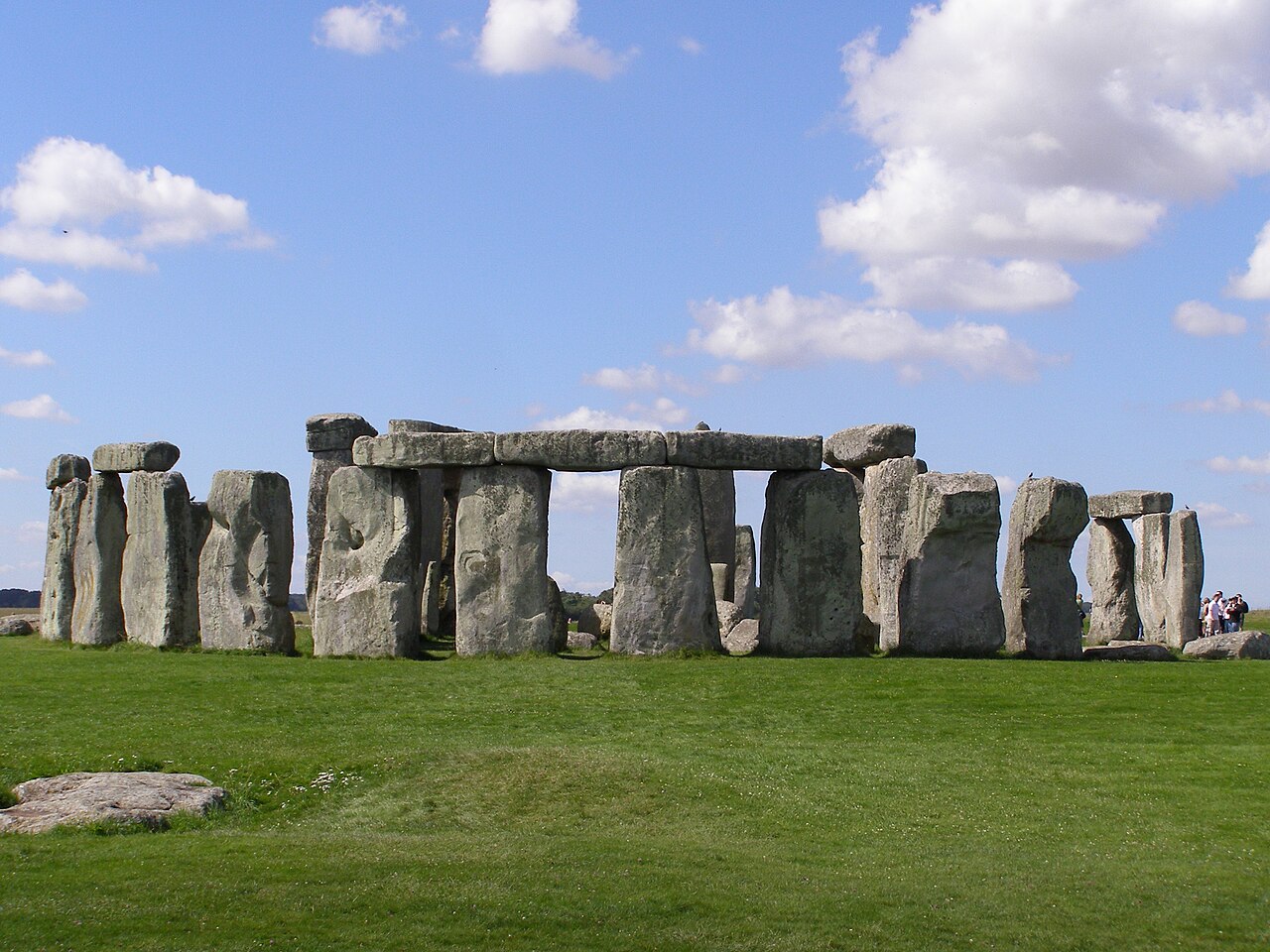
Nestled within the inner sanctum of Stonehenge, lying prone and distinctive, is the Altar Stone. While it might not possess the towering stature of the sarsen trilithons, its significance is immense. It's unique among the primary stones; unlike the smaller bluestones which are igneous rocks, and distinct from the massive sarsen sandstone blocks that form the outer circle, the Altar Stone is a greenish-grey micaceous sandstone. Its position, thought to be central to various astronomical alignments and rituals, hints at a profound spiritual or practical importance to the builders.
Weighing approximately six tons, the Altar Stone is not the heaviest stone at Stonehenge, but its proposed origin places it as arguably the most traveled. While the bluestones were transported some 140-180 miles from the Preseli Hills in Wales, a formidable feat in itself, the idea of the Altar Stone traversing almost three times that distance from the northern reaches of Great Britain elevates the narrative to an entirely new level of prehistoric ambition. This exceptional journey, if confirmed, underscores the extraordinary lengths to which Neolithic people would go to acquire materials they deemed sacred or essential for their monumental constructions.
Tracing the Geological Footprints: Evidence for a Scottish Origin
The theory linking the Altar Stone to Scotland isn't mere conjecture; it's rooted in meticulous geological analysis. Scientists, particularly petrologists, examine the mineral composition, texture, and other unique characteristics of a stone to match it to potential source quarries. In the case of the Altar Stone, its specific type of greenish micaceous sandstone, rich in muscovite and chlorite, has led researchers to identify potential geological matches in various regions, with some pointing compellingly towards sources in Scotland.
While definitive proof remains elusive and research is ongoing, the distinctiveness of the Altar Stone's geology means it stands apart from the local Wiltshire geology and even the Welsh bluestone sources. Geologists use techniques like thin-section petrography and geochemical analysis to create a 'fingerprint' of the stone, comparing it against geological maps and samples from across Britain. If the Scottish connection holds true, it would suggest that the builders of Stonehenge either possessed an unprecedented knowledge of distant geological resources or had established vast trade networks that spanned the entire length of the island. This ongoing scientific detective work continues to add layers to the mystery of Stonehenge's construction. For a deeper dive into the scientific methods, explore The Scottish Origins of Stonehenge's Altar Stone: 466-Mile Transport.
The Epic 466-Mile Prehistoric Transport Challenge
If the Altar Stone did indeed make the stonehenge journey scotland to Wiltshire, it represents one of the most astonishing logistical undertakings in human history. To move a six-ton stone over 466 miles without the aid of modern machinery presents a series of mind-boggling challenges that demand immense planning, manpower, and ingenuity. Let's consider the possible methods and the scale of such an endeavor:
- Overland Transport: Imagine dragging a six-ton stone across hills, valleys, rivers, and dense forests for hundreds of miles. This would likely involve:
- Sledges and Rollers: Logs and ropes would have been essential. Moving such a weight would require dozens, if not hundreds, of individuals to pull, push, and maneuver the stone.
- Preparation of Routes: Trees would need to be felled, paths cleared, and temporary ramps or causeways built over challenging terrain.
- Endurance: Such a journey would not be continuous. It would involve countless stops for rest, repair of equipment, and overcoming natural obstacles. It could have taken years, even decades.
- Waterway Transport: For long distances, water transport would offer a more efficient, though still challenging, option.
- Rafts or Boats: Large, sturdy rafts capable of supporting several tons would need to be constructed. Navigating these down rivers and along potentially treacherous coastlines would require skilled boatmen.
- River Systems: Utilizing rivers like the Tay, Clyde, or Tweed in Scotland, potentially down the east or west coasts of England, and then inland via rivers such as the Bristol Avon, could have formed segments of the journey.
- Portaging: Where river systems didn't connect or waterfalls blocked the way, the stone would have to be unloaded and dragged overland to the next navigable waterway, adding significantly to the complexity.
- A Combination of Both: It's highly probable that the journey was a complex mix of land and sea/river travel, optimizing for the least resistant path. Each segment would require different skills, tools, and organization.
The sheer scale of this task highlights the profound organizational capacity, communal effort, and possibly the hierarchical structure of Neolithic society. It wasn't just about moving a stone; it was about sustaining a massive workforce, providing food, shelter, and coordinating efforts over an unprecedented geographical span. This incredible feat would surely be one of the greatest stories of prehistoric engineering. Learn more about the specific challenges in Stonehenge's Altar Stone: A 466-Mile Journey from Scotland.
Beyond the Stones: Cultural Significance and Enduring Mysteries
Why would ancient people invest such an extraordinary amount of resources, time, and human effort into moving a single stone for 466 miles? The answer likely lies in a complex interplay of spiritual beliefs, social cohesion, and the assertion of power or status. Stones from distant, perhaps sacred, lands might have been imbued with special properties or spiritual power, making their acquisition paramount for a monument like Stonehenge, which was undoubtedly a place of immense ritualistic importance.
The Altar Stone's potential Scottish origin transforms our understanding of the Neolithic worldview. It suggests a culture that was not insular but possessed a deep connection to the wider landscape of Britain, perhaps valuing specific geological materials for their symbolic weight, not just their structural utility. It speaks to a shared cultural or spiritual sphere that transcended vast distances, or perhaps the dominance of a powerful group capable of commanding such an incredible feat. The ongoing quest to definitively prove the Altar Stone's origins keeps the mystery of Stonehenge alive, reminding us that there is still so much to learn about the incredible people who shaped our ancient past.
Conclusion
The Altar Stone of Stonehenge, a silent witness to millennia, holds within its very composition the potential for one of history's most epic journeys. The proposition of a stonehenge journey scotland, a colossal 466-mile transport across the ancient British landscape, challenges our preconceptions of prehistoric capabilities and the limits of human ambition. While geological science continues its meticulous work to confirm this extraordinary origin, the mere possibility compels us to marvel at the ingenuity, perseverance, and profound cultural motivations of the Neolithic people. The Altar Stone is not just a rock; it's a testament to an awe-inspiring human endeavor, a symbol of connection across vast distances, and a cornerstone of Stonehenge's enduring, majestic mystery.